As temperatures rise during the summer months, fish in lakes and ponds face increasing environmental stress. Warm water, low oxygen levels, algae blooms, and poor water quality can quickly create unhealthy conditions that threaten fish populations and overall pond health.
For property owners, HOAs, golf courses, and municipal lake managers, understanding the causes of summer fish stress is essential for preventing fish kills and maintaining a balanced aquatic ecosystem. Proactive pond management can make a significant difference in protecting fish and improving water quality throughout the hottest months of the year.
What Causes Summer Fish Stress?
Fish are highly sensitive to environmental changes, especially during periods of extreme heat. One of the biggest contributors to fish stress in ponds is low dissolved oxygen.
Warm water naturally holds less oxygen than cooler water. During summer, oxygen levels often decline while fish become more active and require more oxygen to survive. At the same time, algae, aquatic weeds, and decomposing organic matter compete for available oxygen in the pond.
Several factors can contribute to summer fish stress, including:
- High water temperatures
- Low dissolved oxygen levels
- Excessive algae blooms
- Overgrown aquatic vegetation
- Stormwater runoff and nutrient pollution
- Sediment buildup
- Decaying leaves and organic debris
- Poor water circulation
- Sudden weather changes
Heavy rain events can also create problems by washing nutrients and pollutants into the pond. This excess nutrient loading often fuels algae growth, which can trigger dangerous oxygen crashes when algae die off and decompose.
Warning Signs of Fish Stress
Fish often show visible signs of stress before a major fish kill occurs. Recognizing these early warning signs can help pond owners take action before conditions worsen.
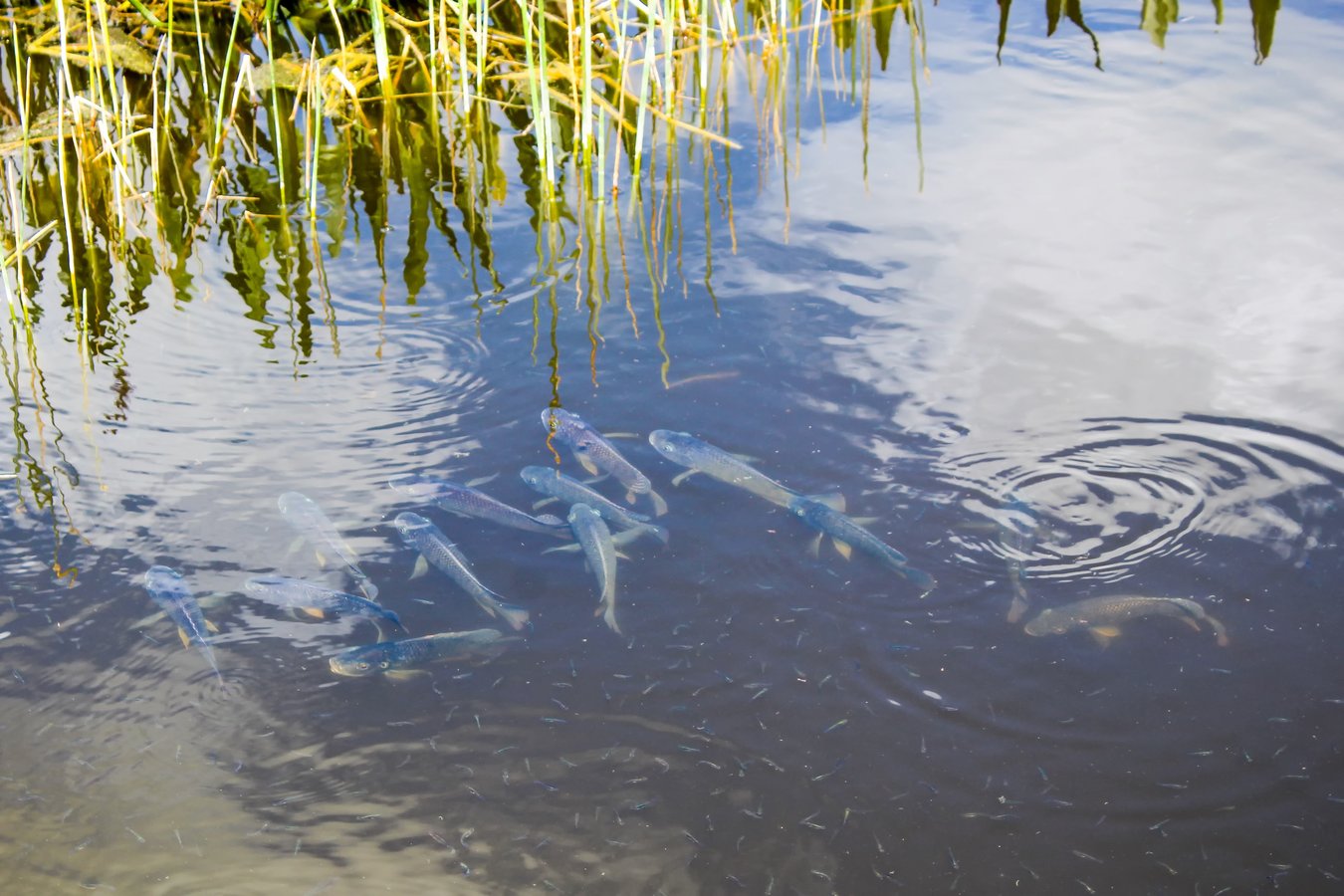
One of the most common signs is fish gasping near the surface of the water, especially during early morning hours when oxygen levels are typically at their lowest. Fish may also gather near fountains, aerators, or moving water where oxygen concentrations are higher.
Additional warning signs include:
- Lethargic or slow-moving fish
- Fish crowding shallow shoreline areas
- Increased algae growth or murky water
- Strong odors coming from the pond
- Sudden fish deaths
- Excessive aquatic weed growth
- Water discoloration
If multiple warning signs appear at once, the pond may be experiencing severe oxygen depletion or declining water quality.
Why Summer Fish Kills Happen
Summer fish kills are often caused by a combination of heat and low oxygen. In many ponds, oxygen levels drop overnight because algae and aquatic plants stop producing oxygen after sunset while continuing to consume it.
When oxygen levels become critically low, fish may suffocate. This risk increases during prolonged heat waves, cloudy weather, or after chemical algae treatments if large amounts of vegetation die and decompose rapidly.
Stormwater ponds and shallow ponds are especially vulnerable because they warm more quickly and often accumulate higher nutrient levels from runoff.
How to Prevent Fish Stress in Ponds
Preventing summer fish stress starts with proactive lake and pond management. Maintaining healthy oxygen levels and balanced water quality can significantly reduce the risk of fish kills during hot weather.
One of the most effective tools for preventing fish stress is pond aeration. Aeration systems improve oxygen circulation throughout the water column while helping reduce stagnation and thermal stratification.
Other important prevention strategies include:
Manage Nutrient Levels
Reducing excess nutrients helps limit algae blooms and oxygen depletion. Proper watershed management, fertilizer control, and shoreline buffers can help minimize nutrient runoff entering the pond.
Control Algae and Aquatic Weeds
Routine algae and aquatic weed management helps maintain oxygen balance and prevents excessive organic decay.
Remove Organic Debris
Leaves, grass clippings, and decaying vegetation contribute to oxygen demand as they break down. Regular debris removal can improve pond health.
Reduce Sediment Accumulation
Sediment buildup can worsen water quality and increase nutrient loading. Beneficial bacteria programs and sediment management strategies may help slow pond aging.
Monitor Water Quality
Regular water quality testing can identify low oxygen levels, nutrient imbalances, and other problems before they become severe.
Protect Your Pond This Summer
Summer fish stress is a common issue in lakes and ponds, but many problems can be prevented with proper management. By improving oxygen levels, reducing nutrient pollution, and maintaining healthy water quality, pond owners can help protect fish populations and reduce the risk of costly fish kills.
If you experience a fish kill, start by calling your professional lake and pond management provider to help identify the cause and recommend the appropriate next steps. A quick response can help prevent additional losses. Remove dead fish as soon as possible, since decomposition can further reduce oxygen levels and worsen pond conditions. If your pond has an aeration system or fountain, keep it running continuously to improve circulation and oxygenation. Avoid applying additional algae treatments or herbicides immediately after a fish kill, as rapid vegetation die-off can create even greater oxygen depletion. Water quality testing and professional pond evaluation can help determine the source of the issue and identify long-term solutions to improve pond health and reduce future fish stress.
At Jones Lake Management, we provide customized lake and pond management solutions designed to improve water quality, support healthy fisheries, and keep your pond thriving throughout the summer season.
About Jones Lake Management
Since 1949, Jones Lake Management has been a trusted leader in lake and pond management, delivering scientifically backed solutions to create and maintain healthy, balanced, and beautiful waterbodies throughout the Midwest, Southeast and Texas. Our expert team offers a full range of services, including fish stocking, fisheries management, water quality monitoring, algae and aquatic weed control, aeration solutions, erosion control, invasive species management, hydraulic dredging, and more. Whether you manage a private lake, an HOA stormwater pond, a golf course water feature, or a municipal waterway, we provide customized solutions to ensure your waterbody remains healthy, functional, and thriving.
Discover our trusted lake and pond management partners nationwide—bringing expertise and care to communities across the country. From Aqua Services and Pond Lake Management in the Southeast, to Water and Wetland in New England, Savin Lake Services in Michigan, Wisconsin Lake and Pond Resource in Wisconsin, Aquatics Associates in Colorado, and Johnson Lake Management and Aquatic Features in Texas, each partner delivers premier service tailored to their region. Visit us at www.joneslakemanagement.com