Every lake and pond loses depth over time. Sediment washes in from runoff, shorelines erode, and organic material settles and breaks down on the bottom. In most cases this happens slowly enough that it goes unnoticed for years, until a lake that once supported boating and healthy fish populations is suddenly shallow, muddy, and struggling. Dredging is the process that reverses that buildup and restores a lake's depth and function.
What Is Dredging?
Dredging is the removal of accumulated sediment, muck, and organic debris from the bottom of a lake or pond. It restores water depth, improves water quality and circulation, increases storage capacity in stormwater ponds, and can reverse years of gradual decline that maintenance alone can't fix.
Signs a Lake or Pond Needs Dredging
- Noticeably shallower water than in past years, especially near inlets and shorelines
- Soft, muddy bottom that makes wading or launching boats difficult
- Standing water that drains slowly or poorly after rain events
- Recurring algae blooms tied to nutrient-rich bottom sediment
- Reduced storage capacity in a stormwater or detention pond during heavy rain
- Persistent weed growth concentrated in shallow, sediment-filled areas
- Site Assessment and Sediment Survey — Before any equipment is mobilized, a depth and sediment survey establishes how much material needs to be removed, where it's concentrated, and what dredging method fits the site.
- Permitting and Regulatory Review — Depending on the size and location of the waterbody, dredging can require permits from state environmental agencies, the U.S. Army Corps of Engineers, or local stormwater authorities. This step is often the longest part of the timeline and should be started early.
- Sediment Placement Planning — Dredged material has to go somewhere. Projects typically use an on-site dewatering area, off-site disposal, or beneficial reuse of the material, depending on volume and site constraints.
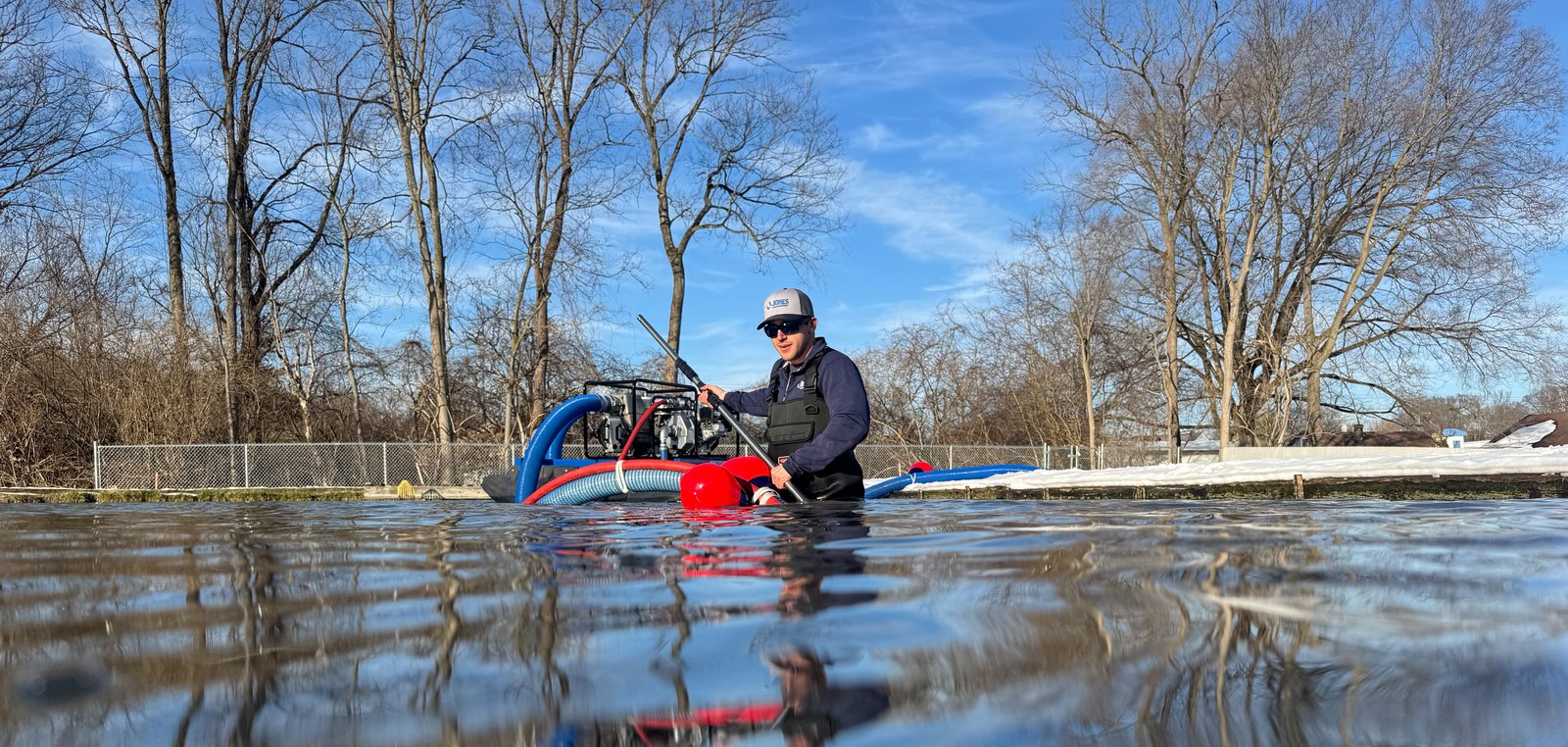
- Dredging — Equipment removes sediment from the lake bottom using the mechanical or hydraulic method determined during planning, working section by section to reach target depths.
Dewatering and Site Restoration — Removed sediment is dewatered, and shoreline or containment areas disturbed during the project are restored and stabilized to prevent new erosion.
What Affects the Cost of Dredging a Lake
- Total volume of sediment to be removed
- Site access and whether equipment can reach the water directly
- Mechanical vs. hydraulic method
- Distance and method for sediment disposal or placement
- Permitting requirements and project timeline
Dredging is a significant investment, and the right approach depends heavily on the specifics of the waterbody. A qualified contractor should start with a real sediment survey rather than a rough estimate, walk through permitting requirements up front, and be able to explain why a given method fits your lake rather than defaulting to whatever equipment they happen to have available.
Take Dredging — Common Questions
How much does it cost to dredge a lake?
Cost varies widely based on sediment volume, dredging method, site access, and disposal requirements — small residential ponds may run into the low tens of thousands, while large lake or municipal stormwater projects can run significantly higher. A sediment survey is the only reliable way to scope an accurate estimate for a specific waterbody.
How long does dredging a lake take?
Timelines depend heavily on permitting, which can take months depending on the waterbody and jurisdiction. Once permitted, the physical dredging work itself typically runs from a few weeks for smaller ponds to several months for larger lakes.
Does a lake need to be drained to be dredged?
Not necessarily. Mechanical dredging often requires partial or full draining, while hydraulic dredging can typically be performed with the lake still filled. Which approach fits depends on site access, lake size, and project goals.
Do I need a permit to dredge a pond?
In most cases, yes. Permitting requirements vary by state and by the size and classification of the waterbody, and may involve state environmental agencies, the Army Corps of Engineers, or local stormwater authorities. A qualified contractor will identify which permits apply and manage the application process.
Talk to a Dredging Specialist
Our team performs sediment surveys, coordinates permitting, and carries out both mechanical and hydraulic dredging projects for HOAs, municipalities, and private lake owners. Contact us today to learn more!
About Jones Lake Management
Since 1949, Jones Lake Management has been a trusted leader in lake and pond management, delivering scientifically backed solutions to create and maintain healthy, balanced, and beautiful waterbodies. Our expert team offers a full range of services, including fish stocking, fisheries management, water quality monitoring, algae and aquatic weed control, aeration solutions, erosion control, invasive species management, hydraulic dredging, and more. Whether you manage a private lake, an HOA stormwater pond, a golf course water feature, or a municipal waterway, we provide customized solutions to ensure your waterbody remains healthy, functional, and thriving.
Discover our trusted lake and pond management partners nationwide—bringing expertise and care to communities across the country. From Aqua Services and Pond Lake Management in the Southeast, to Water and Wetland in New England, Savin Lake Services in Michigan, Wisconsin Lake and Pond Resource in Wisconsin, Aquatics Associates in Colorado, and Clear Water, Johnson Lake Management and Aquatic Features in Texas, each partner delivers premier service tailored to their region. Visit us at www.joneslakemanagement.com