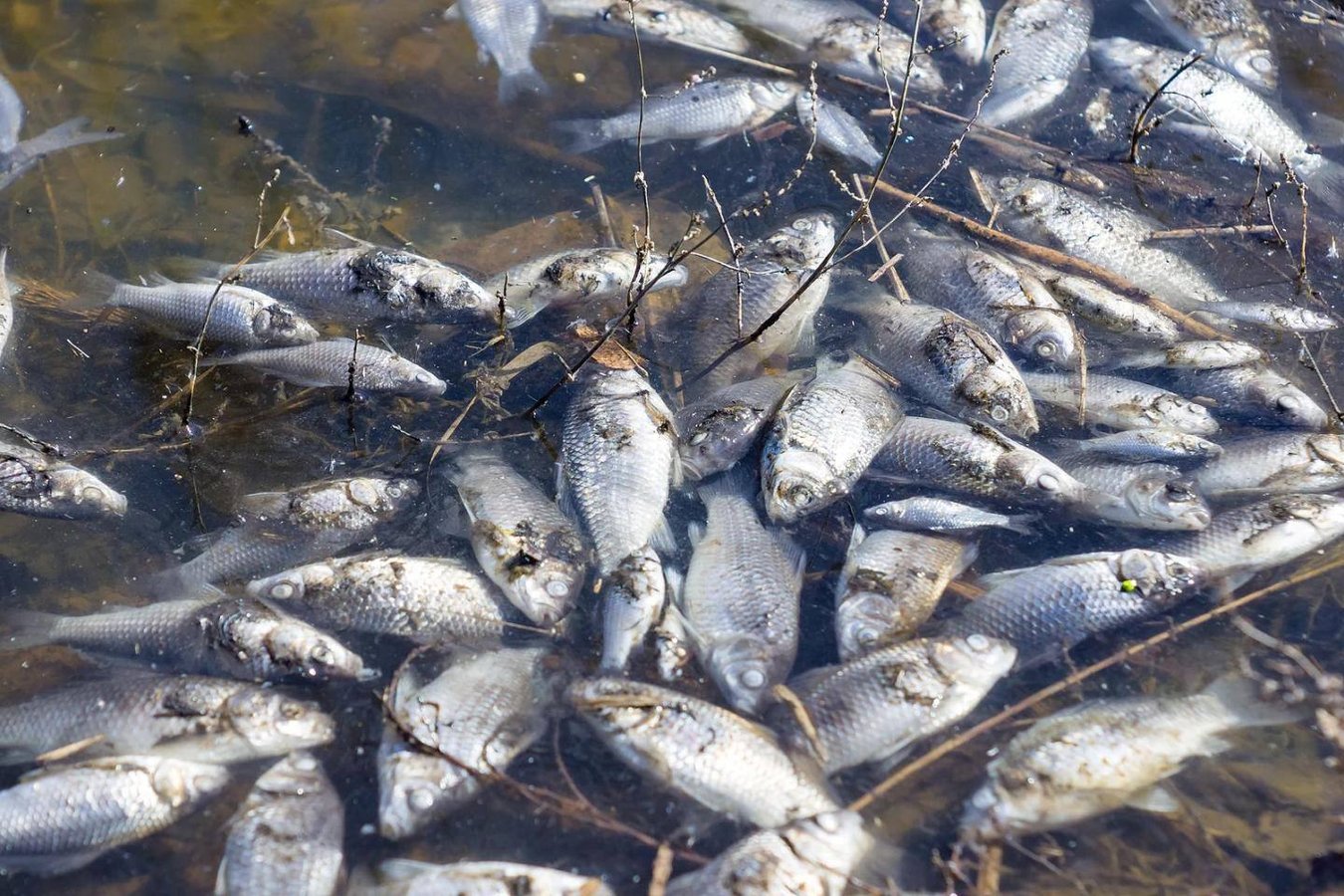
Spring fish kills are one of the most common issues pond and lake owners face as winter transitions into warmer weather. While finding dead fish along the shoreline can be alarming, these events are typically tied to predictable seasonal changes. Understanding the causes of spring fish kills and implementing proactive pond management strategies can significantly reduce fish mortality and protect long-term water quality.
What Causes Spring Fish Kills?
Most spring fish kills are linked to low dissolved oxygen, environmental stress, and fish population imbalances. Several factors commonly contribute:
-
Low Dissolved Oxygen After Ice Melt
During winter, ice and snow limit oxygen exchange between water and air. At the same time, aquatic vegetation and organic debris continue decomposing beneath the surface, consuming dissolved oxygen. By early spring, oxygen levels may already be critically low. When ice melts, fish weakened by months of stress may suffocate. Shallow ponds are especially vulnerable because they hold less total oxygen.
-
Spring Turnover and Water Stratification
Ponds naturally stratify into temperature layers during colder months. As surface water warms in spring, it mixes with colder, oxygen-depleted bottom water in a process known as spring turnover. Without a properly designed pond aeration system, this mixing can rapidly reduce oxygen levels throughout the water column. Sudden oxygen crashes during turnover are a leading cause of spring fish mortality.
-
Disease, Spawning, and Post-Winter Stress
Fish immune systems weaken during winter due to limited feeding and environmental stress. As temperatures rise and spawning begins, fish expend additional energy, increasing susceptibility to bacterial and fungal infections. When low dissolved oxygen combines with disease pressure, mortality rates rise significantly.
-
Overcrowding and Fishery Imbalance
Fish population management plays a critical role in prevention. Overstocked ponds create competition for food, leaving fish in poor condition entering winter. These weakened fish are less able to survive early spring oxygen fluctuations.
Maintaining proper predator-to-forage ratios supports a healthy pond ecosystem. Predator species such as bass rely on forage fish like fathead minnows and golden shiners. Limited forage weakens predators, while too few predators allow forage populations to expand rapidly, increasing biomass and oxygen demand. Balanced fisheries are more resilient during seasonal transitions.
How to Prevent Spring Fish Kills
Although the weather cannot be controlled, proactive pond maintenance and water quality management can dramatically reduce risk.
-
Install a Pond Aeration System
A professional pond aeration system is the most effective tool for preventing low dissolved oxygen. Bottom-diffused aeration circulates water, prevents stratification, and reduces the severity of spring turnover. During winter, aeration can maintain an opening in the ice to support oxygen exchange.
Surface aerators and fountains enhance circulation and boost dissolved oxygen levels, helping prevent low-oxygen events while adding visual appeal. Proper sizing according to pond depth and surface area ensures optimal performance. Jones Lake Management offers flexible aeration leasing options, making this important investment more manageable and budget-friendly for your pond or lake.
-
Reduce Nutrient Loading
Excess nutrients, particularly phosphorus and nitrogen, fuel algae growth. When algae die off, decomposition consumes large amounts of oxygen, contributing to fish kills.
Effective nutrient management includes reducing fertilizer runoff, stabilizing shorelines, limiting organic debris, applying phosphorus-binding products, and using beneficial bacteria to accelerate organic matter breakdown. Lower nutrient levels help stabilize dissolved oxygen and improve water clarity.
-
Remove Sediment and Organic Buildup
Sediment accumulation increases oxygen demand and reduces pond depth. Professional dredging removes nutrient-rich muck, restores water volume, and improves long-term water quality, especially in older ponds with recurring fish kills.
-
Monitor Water Quality
Routine testing of dissolved oxygen, pH, and nutrient levels allows for early detection of potential problems. Shallow ponds under eight feet deep require especially close monitoring during seasonal transitions.
-
Implement Fish Population Management and Forage Stocking
Balanced fish populations are essential for long-term pond health. Strategic fish stocking maintains proper predator-to-forage ratios, prevents overcrowding, and supports strong fish condition entering winter.
Annual forage stocking improves predator nutrition, distributes biomass more evenly, and reduces biological stress. When combined with aeration and nutrient control, fishery management significantly lowers the likelihood of spring fish kills.
Protect Your Pond with Professional Pond Management
Spring fish kills are often triggered by seasonal stress, but can usually be prevented with a science-based management plan. A proactive approach, including aeration, nutrient control, sediment management, and balanced fish populations, keeps your pond stable year-round.
Early action is essential. Monitoring dissolved oxygen, reducing excess nutrients before algae blooms form, and maintaining balanced fisheries helps prevent costly damage and protect your investment.
At Jones Lake Management, we provide expert pond and lake management services tailored to each waterbody’s unique conditions. From custom pond aeration system design and nutrient reduction programs to dredging and fish stocking, our team delivers long-term solutions that strengthen ecosystem health and reduce the risk of spring fish kills.
Don’t wait until you see fish at the surface. Contact Jones Lake Management today to schedule a professional pond assessment and let our science-based solutions protect your investment and aquatic ecosystem this season and beyond.
About Jones Lake Management
Since 1949, Jones Lake Management has been a trusted leader in lake and pond management, delivering scientifically backed solutions to create and maintain healthy, balanced, and beautiful waterbodies. Our expert team offers a full range of services, including fish stocking, fisheries management, water quality monitoring, algae and aquatic weed control, aeration solutions, erosion control, invasive species management, hydraulic dredging, and more. Whether you manage a private lake, an HOA stormwater pond, a golf course water feature, or a municipal waterway, we provide customized solutions to ensure your waterbody remains healthy, functional, and thriving.
Discover our trusted lake and pond management partners nationwide—bringing expertise and care to communities across the country. From Aqua Services and Pond Lake Management in the Southeast, to Water and Wetland in New England, Savin Lake Services in Michigan, Wisconsin Lake and Pond Resource in Wisconsin, Aquatics Associates in Colorado, and Clear Water, Johnson Lake Management and Aquatic Features in Texas, each partner delivers premier service tailored to their region. Visit us at www.joneslakemanagement.com